

Cameroon timber
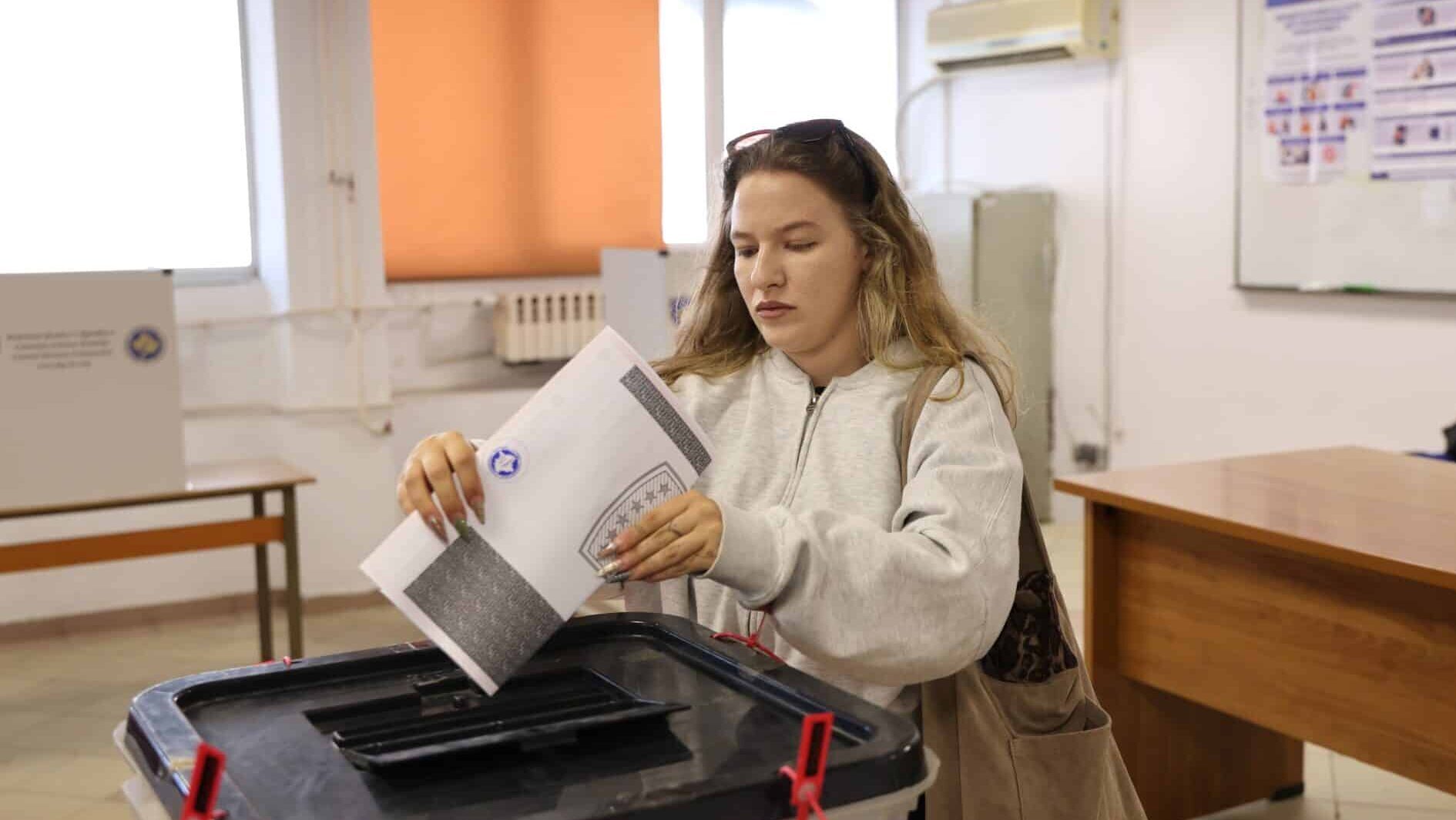
A woman casts her ballot for the parliamentary elections in Pristina, Kosovo, 7 June 2026. Photo: EPA/GEORGI LICOVSKI
Albin Kurti’s Vetevendosje party appeared to be heading toward another election victory as preliminary results from Sunday’s snap polls gave him the lead but with a lower margin to opposition parties compared to last December’s elections.
With 97.8 per cent of the ballots counted, Vetevendosje had won 43 per cent, well ahead of the Democratic Party of Kosovo, PDK, on 21 per cent and the Democratic League of Kosovo, LDK, on 17.6 per cent. The Alliance of the Future of Kosovo, AAK, took 7.2 per cent, becoming the last party to pass the 5-per-cent threshold needed to secure a seat in parliament. Vetevendosje’s support shrank while opposition parties slightly increased their support compared to the last election. Turnout was also lower compared to last December, on around 37 per cent. This does not include conditional ballots, votes cast by people with special needs, and votes from the diaspora, which will help determine whether Kurti can form a government without a coalition.
Vlora Citaku, the PDK’s secretary general, blamed Kurti for the low turnout. “Kurti’s government has produced a big disappointment among citizens and constant crisis,” she told a press conference. LDK, the other opposition party, was also satisfied with the result.
“With 20 seats [in parliament], the LDK has a great future ahead,” Lumir Abdixhiku, LDK leader, said. When the polls closed at 7 p.m., political leaders hailed the conduct of the vote.
“The citizens’ will expressed in today’s elections is within the ballot boxes. Its protection is an inseparable condition of the legitimacy and credibility of the electoral process,” Kurti said on Facebook after the polls closed. Kreshnik Radoniqi, Chairman of the Central Election Commission, CEC, said after the polls that the voting process “went smoothly and that no incidents had been recorded that could have affected the integrity or overall conduct of the vote”. More than 100 state prosecutors and prosecutorial officials were deployed across Kosovo to monitor the electoral process, which recorded several minor incidents. Police said they had opened 17 criminal cases related to alleged electoral offences in cooperation with the Prosecutor’s Office.
“The cases involve suspected violations, including breaches of voting secrecy, destruction of voting materials, abuse of voting rights and vote-buying”. “Five suspects have been placed in detention in connection with the investigations,” the police noted. The State Prosecution said that of the 17 cases, four were recorded in Prishtina, six in Prizren, two in Peja, three in Ferizaj and two in North Mitrovica. “Five suspects were detained, while 12 others were released and will be investigated under regular legal procedures,” it said. The election monitoring coalition Democracy in Action, DnV, said that, “despite significantly lower voter turnout, the voting process unfolded in a calm atmosphere, with voters able to exercise their right to vote freely and equally”. Sunday’s snap elections became inevitable after parliament’s failure to elect a President in April, when outgoing President Vjosa Osmani’s five-year term ended. In the last elections in December 2025, Vetëvendosje won 57 seats in the 120-seat parliament, the PDK won 22 seats and the LDK, 15