

Cameroon timber
Photo courtesy: CFLPA
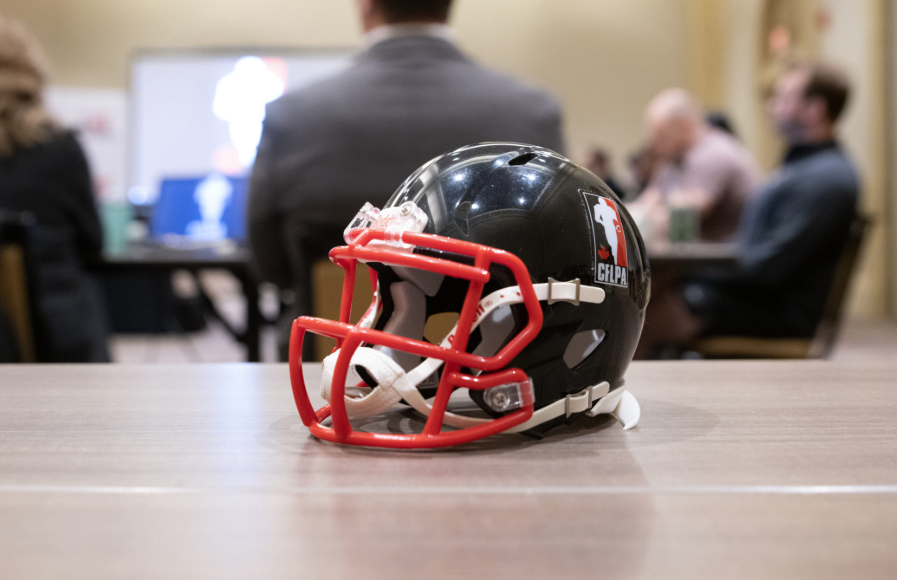
The Canadian Football League Players’ Association (CFLPA) has released the results of its second annual report card, allowing players to anonymously assess all nine CFL teams.
Four franchises saw their overall grade improve from last year: the Hamilton Tiger-Cats, Calgary Stampeders, B.C. Lions, and Edmonton Elks. After installing a new president, general manager, and head coach, Edmonton jumped four spots to fifth place overall.
The Green and Gold were dead-last in 2024 with an average letter grade of D+. They were the only franchise to record an F in any category, doing so in both nutrition & diet and training camp. Those categories improved to C- and C+, respectively, while their D- grade in team travel transformed into the first A+ ever reported by the CFLPA. The result was an overall grade of B-.
On the opposite end of the spectrum, two franchises saw their grades decline last season: the Montreal Alouettes and Ottawa Redblacks. After finishing third in 2024 with a grade of B-, Ottawa fell the furthest to seventh place with a new mark of C.
The Redblacks received an A- for their football operations on the first CFLPA report card, but saw that drop to a C- in 2025. The team also recorded a C in the newly-separated coaching staff category. The team has since made radical changes in that area by hiring Ryan Dinwiddie away from the Argonauts to be their head coach and general manager, though it should be noted that Toronto received the lowest coaching staff grade of any team at D+ in the final year of Dinwiddie’s tenure.
With grades across the 10 categories averaged to create aggregate scores, the CFL’s nine teams rank as follows.
Hamilton Tiger-Cats — B+ (Last year: B)
2. Saskatchewan Roughriders — B (Last year: B)
3. Winnipeg Blue Bombers — B- (Last year: B-)
4. Toronto Argonauts — B- (Last year: B-)
5. Edmonton Elks — B- (Last year: D+)
6. Calgary Stampeders — C+ (Last year: C-)
7. Ottawa Redblacks — C (Last year: B-)
8. Montreal Alouettes — C (Last year: C+)
9. B.C. Lions — C (Last year: C-)
The Lions and Alouettes finished with the lowest overall grades and were the only teams to receive an F grade in any category in 2025.
B.C. received the inauspicious distinction for nutrition & diet. In their comments on the survey, one player wrote, “The overall nutrition of our team is very below par and what it should be for a professional football team. This needs major improvement.” Another said, “Nutrition is 99 percent on the players here.”
Montreal was flunked for its treatment of families. According to one respondent, “Family support and treatment on gamedays is non-existent and, in my opinion, needs the most improvement of any category.”
Teams were assessed in 10 different categories, two more than last season. Coaching staff was separated from the football operations category, while strength & conditioning was also made unique from therapy & medical staff. Two other categories were tweaked, with management/administration becoming ownership & business operations, and facilities being added to the equipment section.
A full breakdown of what each category entails can be read at the end of this article. The complete grade breakdown was as follows:
Report card grades were generated from responses to a 78-question survey distributed to all CFL players that included multiple-choice, rating, and open-ended questions. Responses were collected anonymously, and scoring for each category was then averaged and normalized to translate the data into standardized letter grades. The CFLPA collaborated with Dr. Desmond McEwan, PhD, an assistant professor in sport psychology at the University of British Columbia, to refine the survey analysis and ensure a comprehensive and impartial systematic review of all data collected.
A total of 381 players completed this year’s survey, down from 495 in 2024. Players were also given the opportunity to make general comments as part of the survey, which elicited positive and negative feedback.
The Hamilton Tiger-Cats, who finished with the best grade for a second consecutive year, got the most glowing comment. One player deemed the team “the class of the CFL” and said they “go beyond the call of duty,” choosing to make improvements despite their already high ranking. In particular, he cited a Thanksgiving dinner that the club hosted for all players and their families.
Other teams were also credited with making positive changes. The Stampeders, previously maligned for their nutrition program, graded out with a B this time, with one person saying it “came together well.” The Blue Bombers, who were singled out for their outdated team plane in 2024, were noted as having improved their travel. Players in B.C. and Saskatchewan cited better strength and conditioning, with the Grey Cup champs also being praised for making “so many improvements” in nutrition, coaching, and family events.
The availability of player appearances and the way they were compensated were frequent complaints across the league. In Saskatchewan, they were “not offered at the rate expected” and were “very slow.” One Lions player said that they were paid “extremely under the market rate” and not compensated for travel to events. A member of the Redblacks said they were not given the opportunity to earn that money, with another stating that things were especially scarce in the offseason.
Winnipeg and Ottawa were criticized for their handling of training camp. For the Bombers, Mike O’Shea apparently had the team in pads “almost every single day” with “zero days off.” The Redblacks were plagued by logistical challenges while staying at Queen’s University in Kingston, which “added much stress … that wasn’t completely necessary” and made the venue “not practical.”
Montreal suffered from some particularly harsh criticism regarding their training room, which one player claimed needs “a lot more work to keep a professional standard.” One player stated that there was a “lack of attention to detail” with machines that don’t work and tubs that are “constantly broken.” A player in Toronto had a different complaint, stating that the quality of team-issued workout gear “does not meet a professional football standard,” and the scarce supply of it led to players spending their own money.
Despite the team’s overall improvement, the Elks were the subject of one of the survey’s most serious allegations. One respondent highlighted the organization’s “terrible rehab planning,” noting it was “extremely inconsistent” and there was a “lack of useful feedback in order to progress from being injured.” According to the player, both injured and non-injured players did not receive enough treatment.
Edmonton was also the subject of the single most commented issue among respondents — just not from their own players. Visiting teams complained about the quality of their accommodations, with one person calling the hotel in the Alberta capital “unacceptable.”
The CFLPA believes team report cards provide valuable insight to help players make informed free agency decisions and raise the standard of conditions around the league. The project was inspired by the NFLPA, which has published its own report card since 2023.
The NFL recently filed a grievance against their union after repeated requests to stop the publication of the grades. At the 2025 State of the League address, CFL commissioner Stewart Johnston was vague when asked if he would pursue a similar tactic, but stated that he supports conversation between the league and the Players’ Association on matters of disagreement.
Below are detailed descriptions for each of the 10 categories as defined by the CFLPA.
Coaching Staff: Players were asked about their relationships with their head coach, coaching staff, and video staff; their team activity scheduling; and their team’s adherence to CBA provisions, including those relating to padded practices and practice times.
Football Operations: Players were asked about their relationships with team management, contract negotiations, and access to necessary tools/resources needed for success.
Ownership/Business Operations: Players were asked about their relationship with team presidents and ownership, as well as their access to resources as it pertains to off-field matters, such as housing, work permits, appearance opportunities, etc.
Facilities & Equipment: Players were asked about overall facility conditions and if they were required to pay for any necessary football equipment, including gloves, mouthguards, and cleats; if they were given an appropriate helmet choice; about the condition of their issued equipment; and about the general knowledge and helpfulness/availability of their equipment staff.
Therapy and Medical Staff: Players were asked if their club had adequate levels of medical staff; if therapy was offered at adequate times in and out of season; about their perceived quality of care; and about the availability of massage and chiropractic therapy.
Strength & Conditioning: Players were asked about the quality of their club workout programs; and about the availability and expertise of the strength and conditioning coach.
Nutrition and Diet: Players were asked what meals their club provides and about the quality of those meals; if they were charged for those meals; about the availability of a club dietician; and about the quality, quantity, and adequacy of nutritional supplements provided.
Team Travel: Players were asked about the quality of their club’s travel arrangements; if the timing of flights allowed for adequate post-game rest and recovery; and about reimbursements for any travel-related expenses.
Training Camp: Players were asked about the quality of their housing during training camp; about the quality of their meals during training camp; whether rest and recovery were prioritized; and if their club adhered to CBA practice time and padded practice requirements during training camp.
Treatment of Families: Players were asked if their club offered services and support for partners and children, including assistance in sourcing housing, childcare, and medical and mental health services; and if family gameday facilities were provided.